
How to Deal with Surveillance by Insurance Companies in Mississippi Car Crash Cases
In the days and weeks following a serious car accident, your focus is on healing. You attend doctor’s appointments, manage physical pain, and try to piece your life back together. But then, a new, unsettling feeling might creep in. A car you do not recognize is parked on your street for hours. You notice the same vehicle when you drive to physical therapy or the pharmacy. You might dismiss it as a coincidence, but the feeling that you are being watched is hard to shake.
This is not paranoia; it is a potential reality for anyone involved in a significant personal injury claim in Mississippi. Insurance companies, tasked with protecting their bottom line, may resort to surveillance to monitor your activities. They are not looking for the truth of your situation; they are looking for a single moment, taken out of context, that they can use to question the severity of your injuries and devalue your claim.
Why Insurance Companies Hire Investigators After a Car Wreck
The primary objective of a for-profit insurance corporation is to minimize financial payouts. After a collision, the at-fault party’s insurer has a legal and financial obligation to cover the damages of the injured party. However, every dollar they pay on your claim is a dollar less in profit. This creates a direct conflict of interest. While you are trying to get the fair compensation needed to cover medical bills and lost wages, the insurance adjuster is looking for reasons to pay as little as possible.
They often hire private investigators for this purpose. The investigator’s job is to gather evidence that contradicts your stated injuries and limitations. If you have claimed a severe back injury prevents you from lifting heavy objects, they hope to capture video of you carrying groceries. If you have stated that you suffer from chronic pain that limits your mobility, they want a photograph of you mowing your lawn or playing with your children in the yard. They are building a case against you, one frame at a time.
What Does Surveillance Look Like in a Mississippi Injury Claim?
Insurance investigators use a variety of methods, some more obvious than others, to monitor claimants. Recognizing these tactics is the first step in protecting your rights and your case.
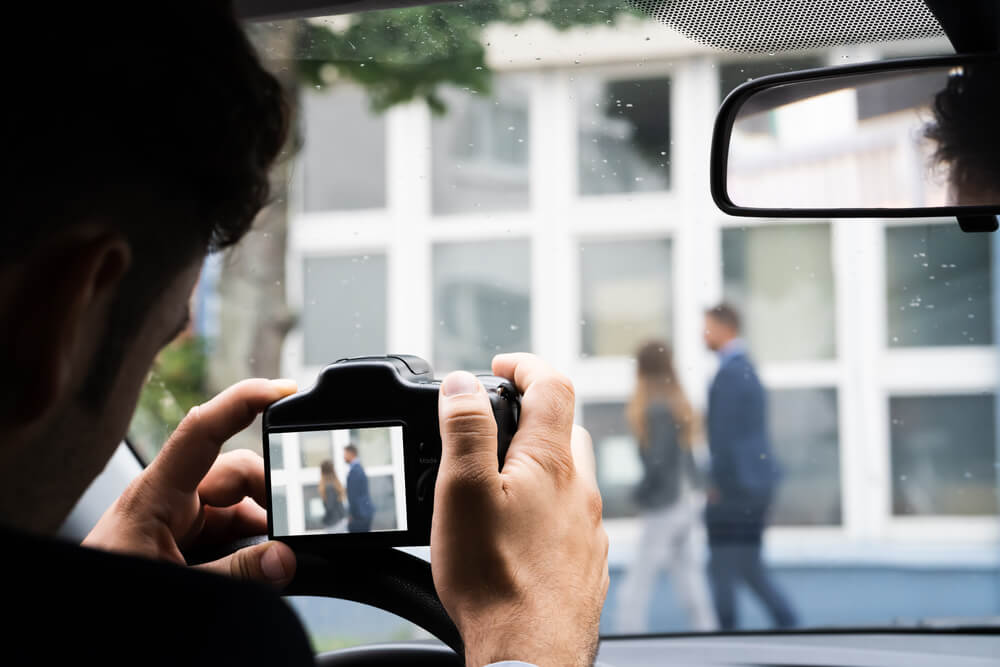
- Physical Surveillance: This is the most traditional form of investigation. A private investigator may follow you from a distance, using a vehicle with tinted windows to remain inconspicuous. They will use high-powered cameras and video recorders to document your activities whenever you are in public view. This can happen anywhere—outside your home, at the grocery store, at a park, or while you attend appointments.
- Online and Social Media Monitoring: In the digital age, this is one of the most common and effective tools for insurers. Investigators will meticulously comb through all your public social media profiles—Facebook, Instagram, X (formerly Twitter), TikTok, and even LinkedIn. They are looking for photos, videos, posts, check-ins, and comments that might suggest your injuries are not as severe as you claim.
- Background Checks: Insurers may conduct extensive background checks to look for information that could damage your credibility. This can include searching for a history of prior injury claims, criminal records, or other details they might try to use to paint you in a negative light.
- Contacting Others: In some cases, an investigator might try to speak with your neighbors, former co-workers, or acquaintances. They may do so under a pretext, asking seemingly innocent questions about your daily routine, your hobbies, or how you have been doing since the accident, all in an attempt to gather information they can use.
Is It Legal for an Insurance Company to Watch Me?
A common question claimants ask is whether this type of surveillance is legal. In Mississippi, as in most states, the answer is generally yes, but with important limitations. An investigator can legally observe and record you in any place where there is no reasonable expectation of privacy.
What is typically allowed
- Observing you from a public street or sidewalk.
- Following you in public.
- Videotaping or photographing you while you are on your own property but visible from a public area (e.g., in your front yard).
- Reviewing your public social media posts and any publicly available records.
What is typically illegal
- Trespassing onto your private property.
- Placing a GPS tracking device on your vehicle without your consent.
- Looking into the windows of your home.
- Recording your private phone calls or in-person conversations without your consent (Mississippi is a one-party consent state for recordings, but this area can be complex).
- Accessing private or “friends-only” social media profiles through hacking or deception.
- Impersonating a law enforcement officer.
If an investigator crosses these lines, the evidence they gather may be deemed inadmissible in court, and they could face legal consequences.
The Digital Footprint: How Your Social Media Is Used Against You
Your social media profiles are a goldmine for insurance investigators. A single photo or post, no matter how innocent, can be twisted and used to undermine your entire personal injury claim. A picture of you smiling at a family gathering may be presented as “proof” that you are not suffering emotionally. A photo from a vacation you took months before the accident could be re-posted by a friend, and the date stamp might be used to imply you recently traveled.
It is vital to assume that everything you post online will be seen by the opposing side. Here are some practical steps to protect yourself:
- Set All Profiles to Private: Go through the security settings on all your social media accounts and set them to the highest privacy level available (e.g., “Friends Only”).
- Do Not Accept New Friend or Follower Requests: Do not accept requests from people you do not personally know and trust. Investigators may create fake profiles to gain access to your information.
- Stop Posting About Your Accident or Your Case: Do not discuss any details of the collision, your injuries, your medical treatment, or your legal claim online.
- Avoid Posting Photos or Videos of Yourself: Even a simple photo can be taken out of context. It is safest to refrain from posting any new images or videos of yourself until your case is resolved.
- Ask Friends and Family to Respect Your Privacy: Politely ask your friends and family not to post any photos of you or tag you in any posts. Explain that it is an important measure to protect your ongoing legal case.
- Do Not Delete Anything: Deleting posts, photos, or entire accounts after an accident can be viewed as destroying evidence, which can severely harm your case. The best course of action is to lock down your privacy settings and stop posting, but leave existing content as it is.
What Are Common “Red Flags” That Trigger Surveillance?
While any claim can be subject to investigation, certain factors make it more likely that an insurance company will decide to spend the money to hire a private investigator. These include:
- High-Value Claims: The more compensation at stake, the greater the insurer’s incentive to find ways to reduce the payout. Claims involving severe injuries, long-term care needs, or significant lost earning capacity are almost always scrutinized.
- Claims Involving Subjective Injuries: Injuries that are difficult to prove with objective medical imaging, such as soft tissue damage (whiplash), chronic pain syndromes, or post-traumatic stress disorder (PTSD), often attract more suspicion from adjusters.
- Prior Injury Claims: If you have filed personal injury or workers’ compensation claims in the past, the insurance company may be more inclined to investigate to see if there is a pattern of making claims.
- Inconsistencies in Your Story: Any perceived contradiction between what you told the responding police officer, what your medical records say, and what you tell the adjuster can trigger surveillance.
- Lack of Immediate Medical Treatment: Insurance companies are often suspicious of claimants who did not seek medical attention at the scene or within a day or two of the accident. They may argue that if you were truly hurt, you would have seen a doctor right away.
How Can Surveillance Impact Your Car Accident Case?
The goal of surveillance is to create a narrative that you are not as injured as you claim to be. An investigator will often film for hours to capture a few seconds of footage that they can use against you.
Imagine you have a serious shoulder injury that requires surgery. Your doctor has instructed you not to lift anything heavier than five pounds. One day, you instinctively reach down to pick up a bag of groceries your child dropped, which weighs ten pounds. An investigator captures that three-second moment on video.
At a deposition or in court, the insurance company’s lawyer will play that clip and ask, “You testified under oath that your doctor told you not to lift more than five pounds, yet here you are lifting this bag. Were you not being truthful about your limitations?” They will ignore the fact that you were in immense pain afterward or that for the other 99.9% of the day, you followed your doctor’s orders perfectly. They use that one isolated incident to attack your credibility and argue that your entire claim is exaggerated.
What Should You Do if You Suspect You Are Being Watched?
Discovering that you are under surveillance can be intimidating and unnerving. How you respond is very important.
- Do Not Confront the Investigator: The investigator wants a reaction. Confronting them can lead to a verbal altercation, which they will likely record and use to portray you as aggressive or unstable. It never helps your case.
- Document Their Presence: If it is safe to do so, use your phone to take a picture or video of the investigator’s vehicle, including the license plate. Make a note of the date, time, location, and a description of the person and their vehicle.
- Behave Consistently and Honestly: Do not try to “put on a show” for the camera by exaggerating your limp or acting more injured than you are. This can be just as damaging as being caught doing something you should not. Simply live your life in accordance with your doctor’s instructions.
- Call Your Attorney Immediately: The most important step is to contact your lawyer right away. Provide them with the documentation you have gathered. Your legal counsel will know how to handle the situation and may send a formal letter to the insurance company regarding the investigator’s conduct, especially if it borders on harassment.
Your Path Forward During a Pending Claim
Living under the possibility of surveillance is stressful, but it should not force you to become a prisoner in your own home. If you have been injured in an accident in Mississippi and are concerned about the insurance company’s conduct, do not navigate this complex process by yourself. The dedicated team at Mississippi Car Accident Attorney is here to provide the guidance and representation you need. Contact us today for a free, no-obligation consultation to discuss your case and learn how we can protect your rights and help you on your path to recovery.


Leave a Reply
Want to join the discussion?Feel free to contribute!