
Wind Buffeting Accidents: Legal Options When Semi-Trucks Create Dangerous Conditions for Mississippi Motorcyclists
The open roads of Mississippi offer some of the best riding experiences in the South, from the coastal stretches of I-10 to the long, straight runs of I-55. But any rider who has shared these highways with commercial freight knows the sudden, jarring impact of an 18-wheeler passing at highway speeds. The physical strike of a truck’s slipstream isn’t just uncomfortable; it is a violent aerodynamic force capable of ripping control away from even the most seasoned motorcyclist.
While most traffic collisions involve direct, physical contact between two vehicles, a significant number of motorcycle wrecks are caused entirely by the invisible turbulence generated by commercial trucks. When a rider is forced off the road or pushed into another lane by a wall of air, the trucking company and its driver may try to claim the motorcyclist simply lost control.
What Is Wind Buffeting and How Does It Cause Motorcycle Crashes?
Wind buffeting occurs when a large commercial truck displaces massive amounts of air at high speeds, creating turbulent high and low-pressure zones. When a motorcyclist enters this unstable slipstream, the sudden aerodynamic force can cause severe speed wobbles, lane departure, or an immediate loss of control.
To understand why this happens, you have to look at the basic aerodynamics of an 80,000-pound tractor-trailer pushing through the atmosphere. A semi-truck does not slice through the air; it shoves it out of the way. This creates a highly pressurized “bow wake” at the front of the cab and a violent, swirling vacuum of low pressure along the sides and rear of the trailer.
When a truck passes a motorcycle, the rider is subjected to rapid, alternating forces. First, the high-pressure wave hits the rider, physically pushing the motorcycle outward toward the shoulder. Seconds later, as the trailer passes, the low-pressure zone creates a vacuum effect, violently sucking the motorcycle back toward the spinning wheels of the truck.
These opposing forces create an incredibly dangerous environment for a vehicle that relies on balance and two small tire contact patches. The resulting instability often leads to:
- Front-end speed wobbles (tank slappers): The intense and violent wind shears generated by the passing semi-truck can severely destabilize the front tire of a motorcycle, causing the handlebars to oscillate rapidly and uncontrollably from side to side until the rider completely loses control and is thrown from the bike.
- Forced lane departures: The initial, powerful blast of air pressure from the truck’s approach and passage can easily exert enough force to push a relatively lightweight 400-pound motorcycle entirely out of its lane of travel, potentially into an adjacent lane of traffic or violently off the shoulder of the road.
- Underride risks: The powerful vacuum or low-pressure effect created by the massive trailer’s wake can dangerously pull a lighter motorcycle directly toward and potentially underneath the trailer, an especially high risk if the rider is surprised or caught off guard by the sudden force.
- Debris strikes: The highly turbulent wake of air vortices behind the semi-truck can violently kick up various objects like rocks, shredded tire treads, and other road debris, propelling them at high velocities, which can strike the rider and cause sudden, painful injury or a critical distraction leading to an accident.
The Unique Danger on Mississippi Highways
The threat of wind buffeting is amplified by the specific conditions found on Mississippi’s major commercial corridors. State and federal highways here carry a heavy volume of commercial freight, logging trucks, and agricultural transport vehicles.
Riding on Highway 49 through the Pine Belt, motorcyclists frequently encounter fully loaded logging trucks. The irregular shape of these loads creates even more chaotic air disturbances than a standard box trailer. On the elevated bridges of the Gulf Coast, such as the Bay St. Louis Bridge or the Pascagoula River Bridge on I-10, natural crosswinds coming off the water combine with the artificial slipstreams of commercial trucks to create an aerodynamic trap for riders.
In the high-traffic areas around Jackson, where I-20 and I-55 converge, the sheer volume of commercial traffic means a rider might be caught in the overlapping wakes of multiple tractor-trailers simultaneously. A rider attempting to maintain their lane near the Stack in Jackson is already dealing with merging traffic and tight curves; adding the violent turbulence of a speeding 18-wheeler often leaves no room for recovery.
Can a Truck Driver Be Held Liable for a Wind Buffeting Accident in Mississippi?
Yes, a commercial truck driver can be held liable if their negligence contributed to a wind buffeting accident. This happens when drivers speed, pass motorcycles too closely, execute unsafe lane changes, or fail to adjust their driving for high wind conditions as required by federal regulations.
Commercial drivers are held to a higher standard of care than everyday motorists. They hold Commercial Driver’s Licenses (CDLs) and are required to understand the physical capabilities and dangers of the massive machines they operate. The Federal Motor Carrier Safety Administration (FMCSA) sets specific rules regarding how commercial trucks must be driven, particularly around smaller, more vulnerable vehicles.
Liability in a wind buffeting case usually hinges on proving that the truck driver failed to operate their vehicle safely, given the presence of the motorcycle. Common examples of driver negligence include:
- Aggressive passing: Failing to leave adequate space when overtaking a motorcycle, thereby subjecting the rider to the maximum force of the turbulent air known as the bow wake. This sudden, forceful air disturbance can easily push a motorcycle off course or cause a loss of control.
- Speeding: The aerodynamic force generated by a large semi-truck, which creates the dangerous wind buffeting effect, increases exponentially with speed. A truck traveling at 75 mph, for instance, creates a significantly more powerful and dangerous slipstream effect than one traveling at or below the posted speed limit, making the encounter much riskier for a motorcyclist.
- Failure to adjust for weather: Federal Motor Carrier Safety Administration (FMCSA) regulations explicitly require truck drivers to reduce their speed by at least one-third in hazardous weather conditions. This includes conditions such as heavy rain, fog, ice, and, critically, high crosswinds, which dramatically increase the already present danger of wind buffeting.
- Unsafe lane changes: Merging into a lane before fully and safely clearing a motorcycle can be exceptionally dangerous. This maneuver often traps the smaller, lighter motorcycle in the powerful low-pressure zone, or “vortex,” located near the truck’s rear axles, which can violently pull the motorcycle toward the truck or cause the rider to lose stability.
Furthermore, the trucking company itself can be held vicariously liable for the actions of its driver. If the company enforced unrealistic delivery schedules that encouraged speeding along I-55, or if they failed to properly train the driver on sharing the road with vulnerable vehicles, the company bears responsibility for the resulting crash.
Investigating the Crash: Finding the Invisible Evidence
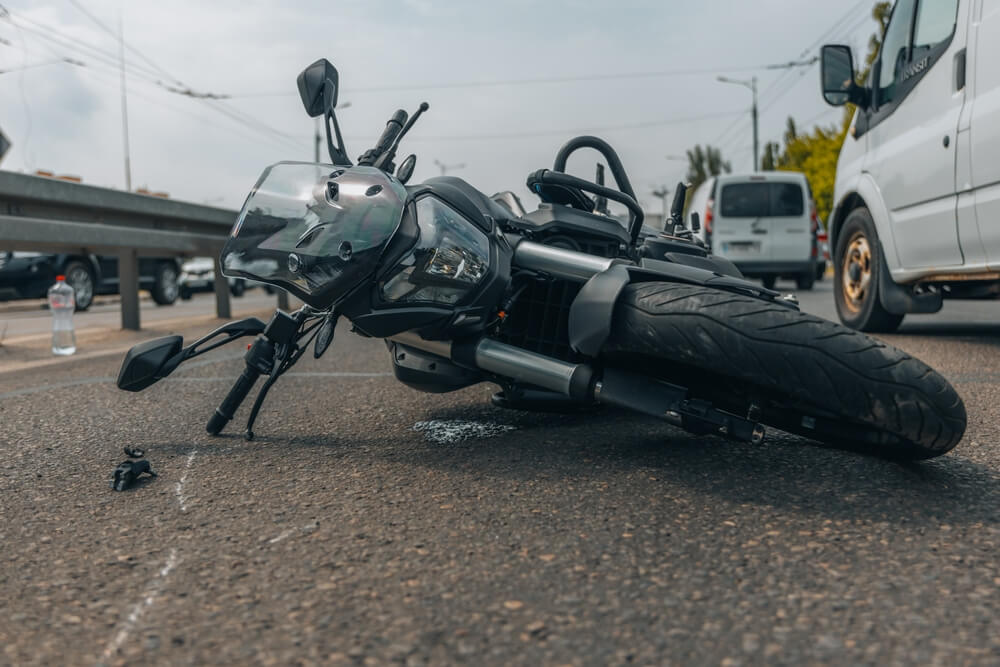
One of the primary challenges in a wind buffeting claim is that there is often no physical contact between the semi-truck and the motorcycle. These are frequently referred to as “phantom vehicle” or “no-contact” accidents. When the police arrive at a crash scene on Highway 61, they may only see a downed motorcycle and assume the rider simply lost control. The truck driver may not have even noticed the crash in their mirrors and likely continued driving.
Building a strong case requires immediate and aggressive investigation to prove that the truck’s wake was the direct cause of the accident. Evidence disappears quickly from the roadway, making early intervention vital.
Our investigation process includes tracking down:
- Electronic Data Recorder (EDR) information: If the truck can be identified, we send a spoliation letter to prevent the destruction of the truck’s “black box” data, which records speed, braking, and steering inputs at the time of the incident.
- Dashcam and surveillance footage: Video from surrounding vehicles, nearby businesses, or MDOT traffic cameras can definitively show the proximity and speed of the truck relative to the motorcycle.
- Accident reconstruction data: We work with professionals who analyze skid marks, debris fields, and gouges in the pavement to mathematically prove the trajectory of the motorcycle and the forces exerted upon it.
- Meteorological reports: Documenting the natural wind speed and direction at the exact time and location of the crash to demonstrate how it interacted with the truck’s slipstream.
How Does Mississippi’s Comparative Fault Law Affect My Motorcycle Claim?
Mississippi follows a pure comparative negligence system, meaning you can still recover compensation even if you were partially at fault for the crash. However, your financial recovery will be reduced by your assigned percentage of fault, making it vital to aggressively defend against unfair blame.
Insurance companies representing commercial motor carriers are notoriously aggressive when defending claims involving motorcycles. They rely heavily on the unfair, preconceived bias that motorcyclists are inherently reckless. If a rider is blown off the road by a negligent trucker, the defense will inevitably argue that the rider was speeding, inexperienced, or failed to take evasive action.
Because Mississippi is a pure comparative fault state, the court will assign a percentage of blame to everyone involved. If a jury determines you suffered $100,000 in damages, but finds you 20% at fault because you were riding slightly above the speed limit when the truck passed you, your compensation would be reduced to $80,000.
This legal standard highlights exactly why you cannot simply accept the insurance adjuster’s version of events. If your case ends up in a venue like the Hinds County Circuit Court or Harrison County Circuit Court, you need a legal strategy that systematically dismantles the defense’s attempts to shift the blame onto you.
Severe Injuries Commonly Seen at Mississippi Trauma Centers
When a rider is forced off a motorcycle at highway speeds, the human body absorbs the entirety of the impact. Unlike passengers in passenger cars, motorcyclists have no steel cage, airbags, or crumple zones to protect them. Even with a high-quality DOT-approved helmet and heavy riding gear, the injuries sustained in high-speed wind buffeting accidents are often catastrophic.
Victims are frequently airlifted to major trauma centers, such as the University of Mississippi Medical Center (UMMC) in Jackson or Memorial Hospital in Gulfport, requiring immediate, life-saving intervention.
The most common injuries resulting from these crashes include:
- Traumatic Brain Injuries (TBI): Even with a helmet, the concussive force of striking the pavement can cause severe internal bleeding, swelling, and long-term cognitive impairment.
- Spinal Cord Damage: The violent tumbling motion after a fall frequently causes fractured vertebrae, herniated discs, or partial to total paralysis.
- Degloving and severe road rash: Sliding across asphalt at 70 mph can strip away skin and muscle down to the bone, requiring extensive skin grafting and leaving permanent disfigurement.
- Complex fractures: Impacts with guardrails, medians, or the road surface often result in shattered femurs, pelvises, and collarbones that require surgical hardware to repair.
The financial toll of these injuries is staggering. A week in the intensive care unit at Forrest General Hospital, followed by multiple surgeries and months of physical therapy, can easily result in medical bills reaching hundreds of thousands of dollars. This does not account for the wages lost during recovery or the permanent reduction in your ability to earn a living if you are left disabled.
Protecting Your Rights After a Motorcycle Crash
The days and weeks following a severe motorcycle accident are overwhelming. At Mississippi Car Accident Attorney, we stand between injured riders and the massive corporate legal teams employed by commercial trucking companies. We handle the preservation of evidence, the accident reconstruction, and the complex negotiations so that you can focus your energy on physical recovery. We understand the specific dangers of Mississippi’s highways, the local court systems, and the tactics used by defense attorneys to minimize motorcycle claims. If a negligent truck driver’s reckless driving caused the wind turbulence that put you in the hospital, they should be the ones paying for the damage.
If you or a loved one has been injured in a motorcycle accident caused by a commercial truck, contact us today to discuss your legal options.

Leave a Reply
Want to join the discussion?Feel free to contribute!